
Introduction
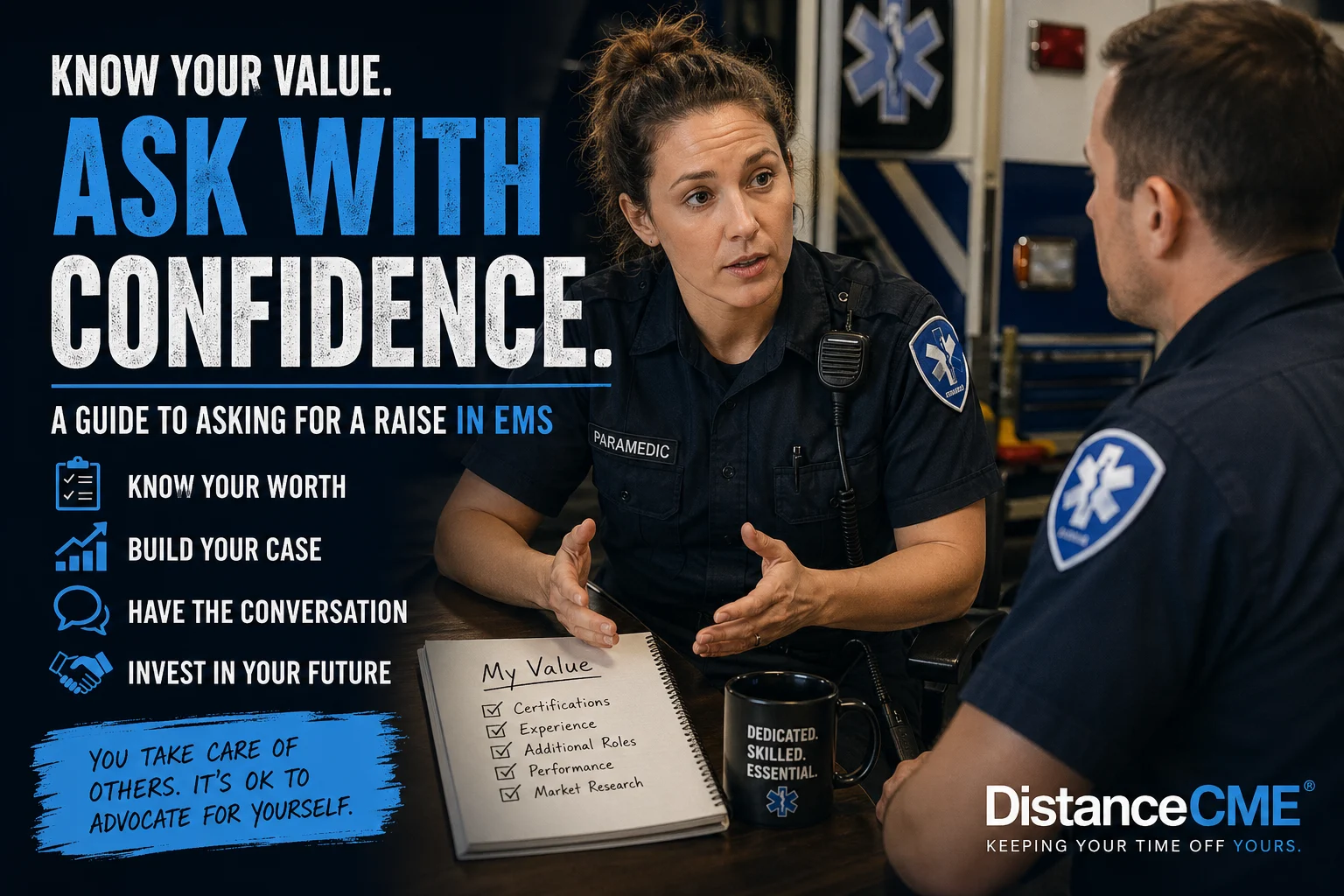
In EMS, we’re conditioned to advocate for our patients—but far fewer providers feel comfortable advocating for themselves. Whether you’re an EMT or paramedic, asking for a raise can feel awkward, intimidating, or even pointless.
But here’s the reality: compensation should reflect your training, responsibility, and impact on patient care. If it doesn’t, it’s time to have the conversation.
This guide will walk you through how to ask for a raise professionally, strategically, and effectively—without burning bridges.
Know Your Worth Before You Ask
Before you approach leadership, you need objective data.
Research:
- Local and regional EMS pay scales
- Cost-of-living increases in your area
- Your certifications (ACLS, PALS, ITLS, critical care, etc.)
- Your years of experience and expanded roles
Reliable data sources like the Bureau of Labor Statistics and industry benchmarks tied to the National Registry of Emergency Medical Technicians can strengthen your case.
👉 Key point: This isn’t about what you feel you deserve—it’s about what you can prove.
Build Your Case Like a Patient Report
Approach this like a clinical scenario:
Chief Complaint: Compensation doesn’t match responsibilities
History: Experience, tenure, certifications
Assessment: Market comparison shows discrepancy
Plan: Request for wage adjustment
Include:
- Additional roles (FTO, preceptor, CQI involvement)
- Leadership responsibilities
- Performance metrics (if available)
- Continuing education and certifications
If you’re operating above your pay grade, document it clearly.
Timing Matters More Than You Think
Don’t walk into this conversation blindly.
Avoid:
- After a difficult call or emotional shift
- During staffing shortages or organizational stress
- Immediately following budget cuts
Aim for:
- Performance reviews
- After completing a new certification
- Periods of hiring or expansion
👉 Why? Your value as a retention asset is strongest when your agency needs stability.
Use Professional, Objective Language
Keep emotion out of it. This is a business conversation.
Avoid:
- “We don’t get paid enough for this job”
- “Other agencies pay better”
Use:
- “Based on my experience and certifications, I’d like to discuss aligning my compensation with my current role.”
- “I’ve taken on additional responsibilities, including [X], and would like to review my pay accordingly.”
Professional language keeps leadership engaged—not defensive.
Be Ready for the Answer (Even If It’s No)
You may hear:
- “It’s not in the budget”
- “We’ll revisit later”
- “That exceeds your pay band”
Don’t let the conversation end there.
Instead:
- Ask for a timeline for reconsideration
- Clarify what benchmarks you need to meet
- Explore alternatives (shift differentials, bonuses, education reimbursement)
👉 A “no” without a roadmap is a dead end. Push for clarity.
When It’s Not You—It’s the System
If your agency:
- Pays significantly below market
- Offers no advancement opportunities
- Doesn’t recognize experience or education
Then the issue isn’t your approach—it’s the environment.
At that point, exploring other opportunities is not disloyal—it’s professional growth.
Sample Script
“I wanted to take some time to discuss my current compensation. Over the past [X years], I’ve expanded my role through [certifications, responsibilities, leadership]. Based on market data and my contributions to the organization, I’d like to request a review and adjustment of my pay rate.”
Final Thoughts
EMS providers show up every day for their communities. You manage chaos, make critical decisions, and impact patient outcomes in ways few professions can.
Advocating for fair compensation isn’t complaining—it’s professionalism.
At DistanceCME, we believe in supporting EMS providers not just clinically, but professionally—so you can grow your career while still keeping your time off yours.
