

Number of Courses: One Live 2-Hour Class
Credit Awarded: 2 Hours
Credit Type: Advanced
Accredited: CAPCE (F5-VILT), CE Broker (FL & TN), Pennsylvania Bureau of EMS, and Virginia Office of EMS
Enrollment Period: One year or until completed, whichever comes first
Topics: Advanced Airway Management
This CE activity is accredited by the Commission on Accreditation for Pre-Hospital Continuing Education for a total of 2 Paramedic CEH.
Are you in need of a few hours to round out your Paramedic or AEMT recertification? This individual NCCP course will meet those needs and is offered several times a month with a varying schedule.
Want to see when classes are offered, click here DistanceCME Course Calendar
Topics covered in this Live NCCP L12
- Advanced Airway Management (2hr)
If you need more than a few hours, this bundle is perfect for your continuing education: Live 30 Hour NCCP + Anytime. You’ll complete your NCCR requirements and also gain access to our Anytime EMS CEU Package, offering over 100 on-demand learning modules with CEUs.
Course Overview
Advanced airway management represents one of the most technically demanding and clinically significant responsibilities performed by the paramedic. Success requires far more than procedural skill—it demands a comprehensive understanding of airway anatomy, patient assessment, physiologic principles, clinical decision-making, and the ability to anticipate complications before they occur. The most successful airway providers understand that the decision to perform an advanced airway intervention is often just as important as the procedure itself. This course provides an evidence-based review of advanced airway management beginning with the anatomy and physiology of the upper and lower respiratory tract before progressing through manual airway maneuvers, airway adjuncts, supraglottic airway devices, endotracheal intubation, difficult airway assessment, emergency surgical airway considerations, and modern airway pharmacology. Throughout the course, emphasis is placed on preparation, first-pass success, and maintaining oxygenation while minimizing complications.
Rather than focusing solely on procedural techniques, learners will develop a systematic approach to airway management that emphasizes patient assessment, equipment preparation, backup planning, and continuous reassessment. The course reinforces the principle that successful airway management begins long before the laryngoscope is picked up.
Airway Anatomy & Physiology
Learners begin with a comprehensive review of upper and lower airway anatomy, including the conducting and respiratory portions of the respiratory tract. The course explores the nasal cavity, oral cavity, pharynx, larynx, trachea, bronchi, alveoli, and the physiological principles responsible for ventilation, oxygenation, and gas exchange. Special emphasis is placed on anatomical landmarks critical to airway management, including the epiglottis, vallecula, vocal cords, thyroid cartilage, cricoid cartilage, cricothyroid membrane, and carina. Understanding these structures allows providers to recognize airway pathology, anticipate procedural difficulty, and perform airway interventions safely and effectively.
Basic & Advanced Airway Management
The course reviews the foundational principles of airway management, including head-tilt/chin-lift and jaw thrust maneuvers, before progressing to airway adjuncts such as oropharyngeal and nasopharyngeal airways. Learners examine proper indications, contraindications, insertion techniques, patient selection, sizing, and potential complications associated with each device.
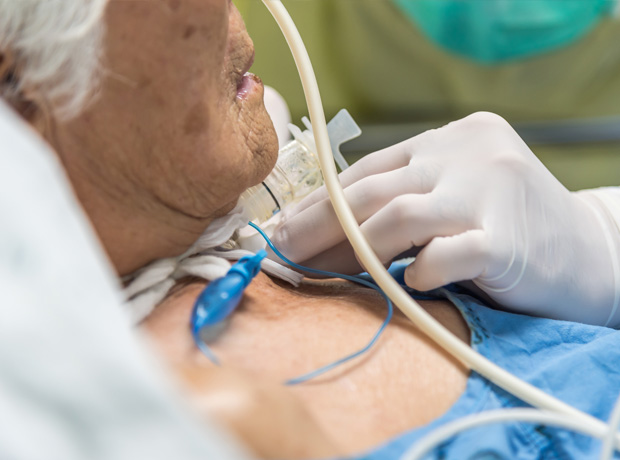
Advanced airway devices—including supraglottic airways, endotracheal tubes, and management of existing tracheostomies—are explored in detail. The course discusses when each device is most appropriate, how advanced airway strategies fit within the overall airway algorithm, and when maintaining basic airway management may provide better patient outcomes than attempting invasive airway procedures.
Difficult Airway Assessment & Management
One of the primary focuses of this course is recognizing and preparing for the difficult airway before airway failure occurs. Learners review evidence-based assessment tools including the Mallampati Classification, Cormack-Lehane grading system, LEMONS assessment, and the HEAVEN criteria to predict anatomical and physiologic airway challenges.
The course also examines common difficult airway scenarios including facial trauma, airway contamination, smoke inhalation, burns, airway edema, Ludwig’s angina, angioedema, airway abscesses, obesity, and limited neck mobility. Learners explore modern airway management strategies including the SALAD (Suction Assisted Laryngoscopic Airway Decontamination) technique, optimized patient positioning, preoxygenation, and methods for improving first-pass success while minimizing hypoxia and aspiration.
Airway Emergencies & Airway Pharmacology
Additional instruction focuses on recognition and management of upper airway obstruction caused by foreign bodies, laryngospasm, airway swelling, trauma, secretions, and aspiration. Learners review evidence-based management strategies for both mild and severe airway obstruction while reinforcing current recommendations for airway interventions across a variety of clinical presentations.
The course concludes with an introduction to airway pharmacology, including commonly used premedications, induction agents, and neuromuscular blocking medications used during advanced airway management. Learners review the indications, pharmacologic properties, physiologic effects, and clinical considerations for medications such as fentanyl, atropine, etomidate, midazolam, ketamine, and paralytic agents while emphasizing appropriate medication selection based on patient presentation and physiologic status.
Clinical Decision-Making
Throughout the course, learners are challenged to think beyond procedural proficiency and develop the clinical judgment necessary to determine when advanced airway intervention is appropriate. Emphasis is placed on maximizing oxygenation, minimizing interruptions in ventilation, anticipating failure before it occurs, and understanding that successful airway management is measured by patient outcomes—not simply successful endotracheal tube placement.
Who Should Take This Course?
This course is primarily designed for AEMTs and Paramedics responsible for advanced airway assessment, airway intervention, medication-assisted airway management, and endotracheal intubation. The material also remains understandable and valuable for EMTs seeking to strengthen their understanding of airway anatomy, airway assessment, airway adjuncts, difficult airway recognition, and evidence-based airway management principles used throughout modern prehospital emergency care.