
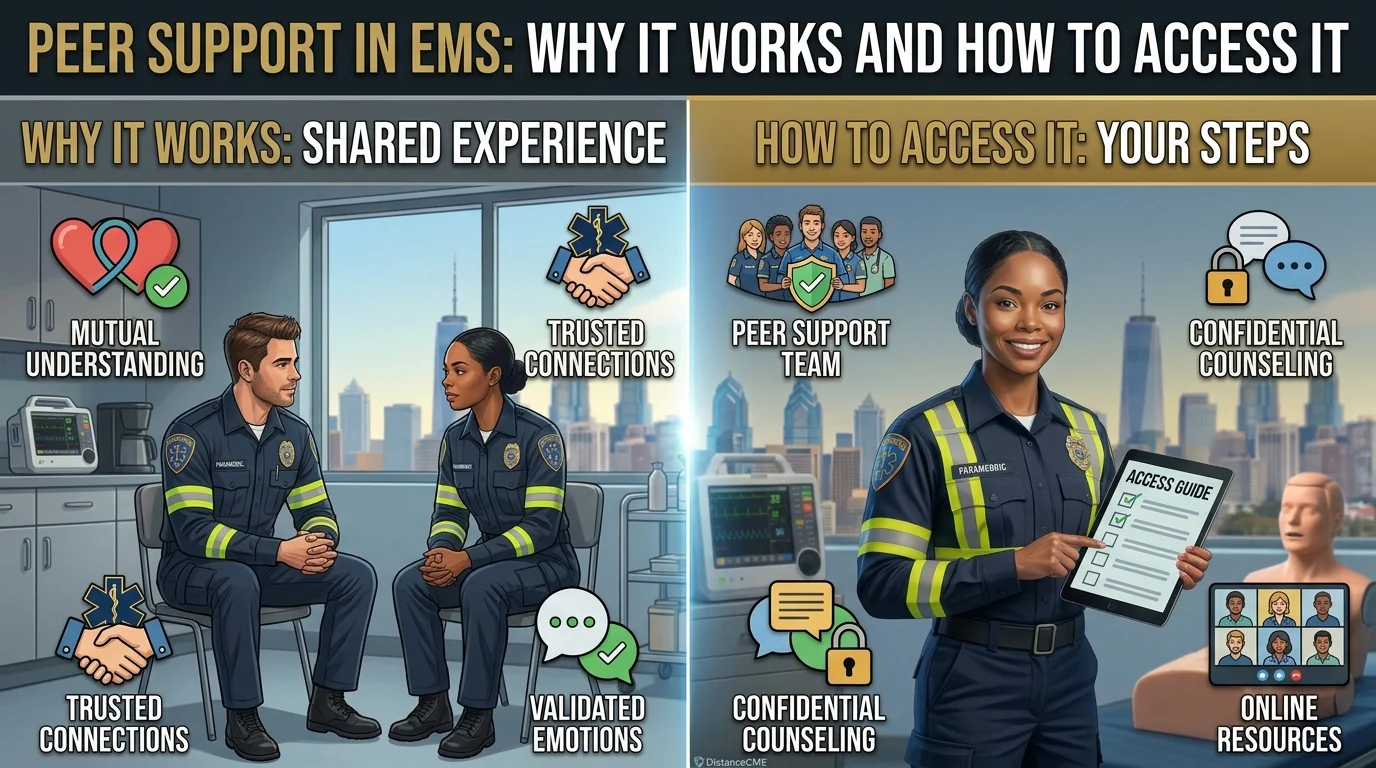
There is a specific kind of understanding that only comes from someone who has actually been in the back of the ambulance, who knows what a bad pediatric call feels like at three in the morning, and who does not need the details explained before they get it. That is the core of why peer support has become such a critical part of EMS culture in recent years, and why more agencies are building formal programs around it.
What Peer Support Actually Is
Peer support in EMS refers to trained coworkers, often fellow EMTs, paramedics, or dispatchers, who are available to talk with colleagues after difficult calls or during periods of personal or professional stress. Unlike a supervisor check-in or a formal counseling referral, peer support is built on shared experience. The person offering support has likely run similar calls, felt similar adrenaline crashes, and understands the specific culture and pressures of EMS work from the inside.
Peer support is not a replacement for professional mental health treatment. It is a first line of connection, often the bridge that helps a struggling provider recognize they need more support and actually follow through on getting it.
Why Peer Support Works So Well in EMS
It Lowers the Barrier to Asking for Help
EMS culture has historically valued toughness and self-reliance, which can make providers reluctant to reach out to a supervisor or an outside counselor after a hard call. Talking to a peer feels different. It does not carry the same fear of judgment or concern about career consequences, which makes providers far more likely to actually open up.
It Comes From Shared Language and Experience
A peer who has run a pediatric cardiac arrest does not need the call explained in clinical detail to understand its weight. That shared frame of reference allows conversations to go deeper, faster, without the provider having to first justify why a particular call hit hard.
It Normalizes Struggling
When peer support is built into an agency’s culture rather than treated as a rare emergency measure, it sends a clear message that struggling after hard calls is a normal part of the job, not a personal failing. That shift in culture alone can reduce the isolation that so often makes burnout and traumatic stress worse over time.
How Peer Support Programs Typically Work
Most formal EMS peer support programs follow a similar structure. Volunteer peers go through specific training, often covering active listening, recognizing warning signs of crisis, confidentiality boundaries, and how to refer a colleague to professional resources when the situation calls for more than a conversation. Programs are frequently paired with a chaplain service, an Employee Assistance Program, or a critical incident stress management team, so peers know exactly where to direct a coworker who needs a higher level of support.
How to Access Peer Support
Ask Your Agency Directly
Many EMS agencies, fire departments, and third-service EMS systems already have peer support programs in place, even if they are not advertised loudly. Asking a supervisor, union representative, or HR contact about available resources is often the fastest way to find out what exists.
Look for Regional or State-Level Programs
In areas where a single agency is too small to run its own peer support team, regional EMS councils or state EMS offices sometimes coordinate peer support resources across multiple departments.
Reach Out to National EMS Organizations
Several national EMS organizations maintain directories or hotlines connecting providers with peer support and crisis resources, which can be a good starting point for providers whose own agency does not yet have a formal program.
Building a Career That Lasts
Peer support works best as one piece of a broader approach to staying well in a demanding career, alongside adequate rest, professional mental health support when needed, and staying confident in your clinical skills through regular training. DistanceCME offers CAPCE-accredited, 100% online, live instructor-led F5 (VILT) and self-paced F3 (Distributive) EMS CE, with more live courses than any other provider, so keeping your certification current does not have to add stress to an already demanding schedule. As a leading provider of Live NREMT Refreshers, Flight and Critical Care Review Courses, and EMS continuing education, we offer EMR, EMT, AEMT, and Paramedic Refreshers along with online EMS training built around real EMS schedules. Use our search feature to find the right course, or contact us and we will help you book what you need.
If you or a colleague are struggling, please reach out to your agency’s peer support program, an Employee Assistance Program, or a mental health professional. You do not have to carry it alone.
