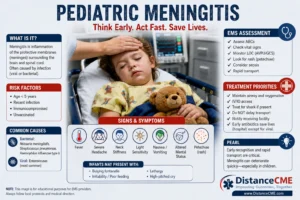

Pediatric Meningitis, while relatively rare, can have devastating effects. Meningitis is
defined as an inflammation of the meningeal layers that surround not only the brain but also the
spinal cord. It typically affects children under the age of 5 due the fact that their immune
systems are still not fully developed. Other groups that are more likely to contract meningitis
are the immunosuppressed, cancer patients, children who have missed vaccinations or are
unvaccinated, patients living in crowded conditions and any patient with a pre existing defect
in the skull or cerebrospinal fluid (CSF) leaks. Meningitis most frequently can be either viral,
bacterial, parasitic or fungal in origin with viral and bacterial meningitis being the most
common. Viral meningitis and bacterial meningitis will often present with fever, malaise, nuchal
rigidity (the inability to touch the patient’s chin to their chest without pain), irritability, bulging
fontanels, poor feeding, inconsolable crying, vomiting, light sensitivity, confusion and
sleepiness. The most accurate method to differentiate bacterial from viral mengiitis is to
perform a lumbar puncture.
While Viral Meningitis is statistically more common, it carries a much better prognosis
for full recovery. Common viral infections that can lead to meningitis include Herpes Simplex,
Mumps, Flu and West Nile Virus. Other findings that differentiate viral meningitis from bacterial
meningitis include: Fever usually less than 100.4 Fahrenheit, a normal to slightly elevated White
Blood Cell count (WBC), normal CSF opening pressures on lumbar puncture, CSF glucose
levels of under 45 mg/dl and Gram Negative cultures. Viral meningitis is most often managed
with supportive care, rest and fluids.
Bacterial Meningitis on the other hand has a much lower frequency with a much higher
morbidity and mortality. The most common causes of bacterial meningitis include
Streptococcus B, E-Coli and Hemophilus influenza B. While similar symptoms will exist, the
symptoms tend to be more severe and the patient will most likely require early, specific
antibiotic therapy to improve their clinical improvement and outcomes. Bacterial meningitis
tends to have a fever greater than 100.5, an elevated CSF opening pressure on lumbar
puncture, increased WBC, Gram Positive cultures and spinal fluid glucose concentration
greater than 45 mg/dl. Bacterial meningitis also can be accompanied by a purple, purpuric
skin rash and greater alterations in level of consciousness including seizures and/or coma.
Two other common tests to test for the presence of meningitis include assessment for
the presence of Kernigs Sign or Brudzinski’s Sign. Kernig’s sign is assessed for by having the
patient lie supine and then flexing the hip at a 90 degree angle with the toes pointing straight
toward the sky and then attempting flex the knee at a 90 degree angle. This flexion of both the
hip and the knee will stretch the already inflamed meningeal layers of the spinal cord and will
often elicit an involuntary neck flexion or report of increased neck pain. To assess for
Brudzinski’s sign, the provider will again have the patient lie supine and then attempt to gently
flex the neck so the chin touches the sternum. Care should be taken to stop as soon as the
patient reports and increased pain level or the knee involuntarily flexes. This test again
stretches the already inflamed meningeal layers of the spinal cord. A postive Kernigs or
Brudzinskis sign tends to increase the likelihood that the patient may be suffering from
meningitis.
Any test or assessment findings should be evaluated in conjunction with other findings
to arrive at a positive diagnosis. While vaccinations are currently available for meningitis, the
vaccine is not a guarantee that the child will not contract the disease. As stated above, certain
groups are at an increased risk not only for contracting the disease, they also carry a higher
potential for increased morbidity and mortality. Early diagnosis and appropriate treatment
regimens will go a long way to not only shorten the course of the disease, but also improve
outcomes and prognoses.