
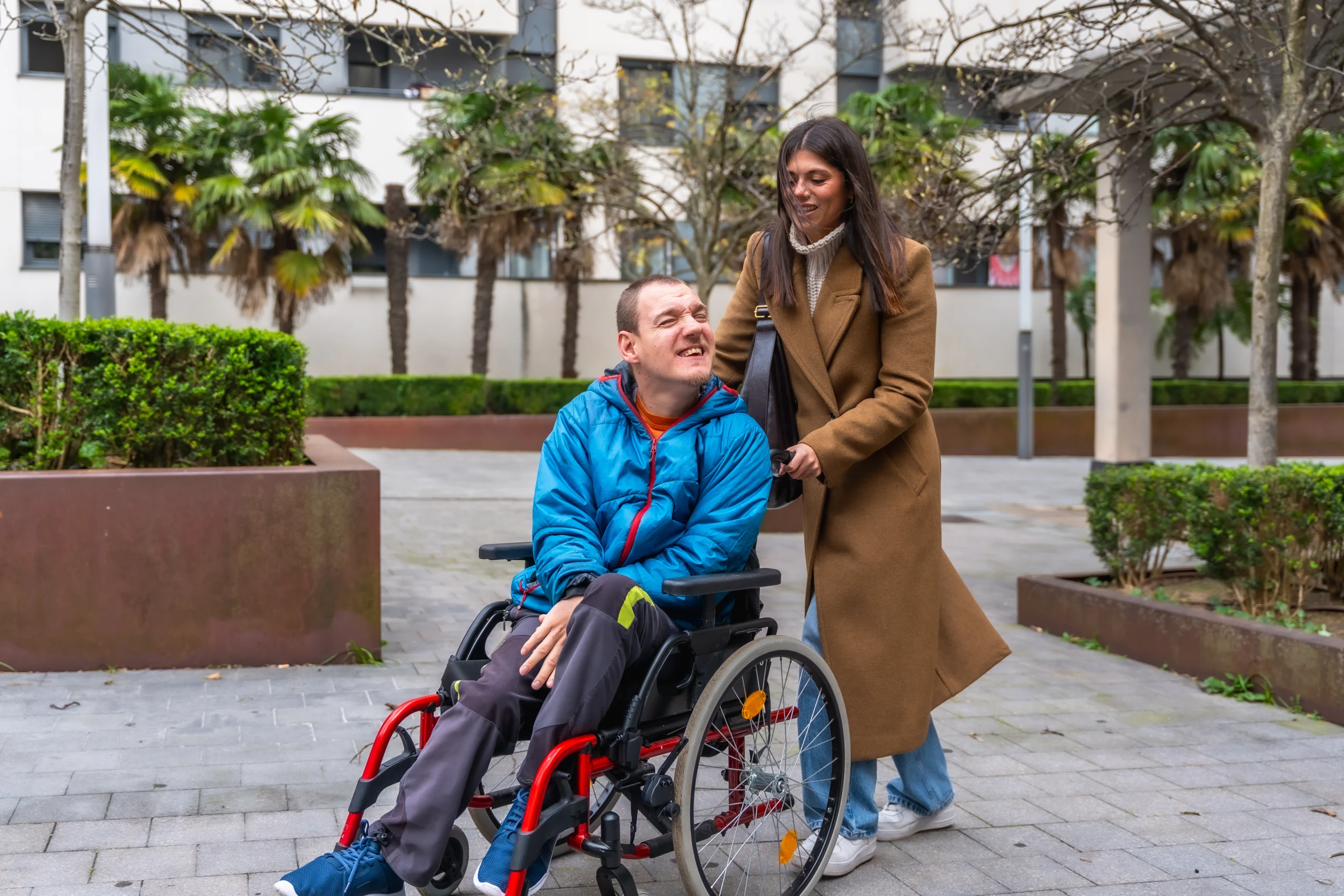
Patients with special healthcare needs can be both unique and challenging when encountered by EMS. Their unique conditions can vary from barely perceptible to life altering. How we assess, communicate, treat and interact with this special population can make the difference between a smooth running patient encounter and a total disaster. The term “Special Healthcare Needs” can encompass anything from mental health issues, patients that have difficulty communicating, technologically dependent individuals, morbidly obese patients, geriatric patients etc. The list is virtually endless.
As EMS providers, we must keep in mind that WE are not the experts on their unique condition and how to best treat them during their time of need. Often the patient themselves, their regular caregivers and/or their family members are usually more well versed in not only what works for their particular complaint, but also what has been attempted and whether or not the interventions already performed have worked or not. We can use these individuals to guide us on what has been already attempted and what should be attempted next. Special healthcare needs patients often have more than one medical or psychological challenge that they are dealing with. Often their complaint is more of an acute on chronic situation and their co-morbid conditions can make assessing and treating their complaints challenging. Most lay persons believe that patients with special healthcare needs have less than average intellect, but often the opposite can be true. Always interact and communicate with them as if THEY are the experts on their condition because often they are the experts.
Technologically dependent patients can often be very intimidating to the uninitiated provider and this may be the first time even experienced providers have encountered the patient’s specific piece of equipment. Each device has its own unique strengths and/or weaknesses as well as its own model-specific settings or connections. This can be a learning experience for the EMS crew that arrives on the scene to assist the patient. Keep in mind that simple is always better. The least amount of equipment necessary for transport is often the best option. While not always an option, anything that can be disconnected (think tube feeding pumps, etc.) the better as this will limit the potential for accidental device dislodgment.
Additionally, always ask the patient or caregiver what equipment they usually take with them when they travel out of the home or facility. Limiting the amount of equipment and supplies to just what is necessary for the transport will also lessen the potential for losing or damaging their equipment during transport. Keep in mind however, things like replacement gastrostomy tubes, tracheostomy tubes etc. should usually accompany the patient to their destination. This practice limits delays in obtaining replacement equipment if it needs to be replaced before being discharged.
Patients with special healthcare needs often suffer from opportunistic complications.
They are more likely to develop pressure sores or ulcers if they are semi mobile or immobile as well as respiratory infections like pneumonia, They often can present with atypical signs and symptoms so always maintain a high index of suspicion for these conditions. Logistically, accessing, assessing, packaging, treating and transporting can be much more involved than their non-special needs counterparts. This becomes highly important in time sensitive situations such as coronary, respiratory, traumatic or neurological complaints. Moving too fast or rushing the encounter with this type of patient can often prove not only difficult but dangerous. Always remember that being methodical and deliberate can often prove to achieve your goals more rapidly than attempting to save time by speeding up your movements.
As technology has improved over the past 3 decades, the number of special healthcare needs patients that are living at home and interacting within our community has increased dramatically. While this population often are very good at “fixing what ails them” without EMS intervention. The sheer number of patients with special healthcare needs out in the community means that eventually some are going to require EMS intervention. How we interact with them and how we treat them has a direct impact not only on how they feel about the interaction with EMS but also can directly affect their outcomes long term. Take time to learn from them and their caregivers and let the information that you obtain guide your treatment modalities and decision making pathways… Everyone stay safe and keep learning.”
